5.0 ★★★★★ 220+ reviews on Google
Physiotherapy Care for ACL Injuries Treatment
Harley Street, Central London
ALO Physio proudly provides expert ACL injury rehabilitation and physiotherapy in Harley Street, London.
ACL Treatment Harley Street
An ACL injury is one of the most significant knee injuries you can sustain. Whether you’ve just injured your knee on the pitch, been told you need surgery, or are several months into recovery and struggling to get back to full fitness, specialist ACL physiotherapy makes a critical difference to your long-term outcome.
At ALO Physiotherapy on Harley Street, we provide comprehensive ACL rehabilitation for both surgical and non-surgical cases. Our approach combines hands-on physiotherapy, objective strength testing using VALD technology, TECAR electrotherapy for inflammation management, and structured return-to-sport programming, all delivered from our specialist clinic in Central London.
We are recognised by Bupa, AXA Health, Vitality, and Cigna, meaning your rehabilitation may be covered by your private health insurance.

Why Choose ALO For ACL Injuries
ALO Physiotherapy is a leading ACL rehabilitation clinic on Harley Street, trusted by patients across London for expert, personalised care.
Expert physiotherapists for ACL Rehab
Our Harley Street team specialises in ACL rehab. Every treatment plan is tailored to your condition, lifestyle, and goals.
We are here to help you
We offer same-day, evening, and weekend physiotherapy appointments so you can begin treatment before symptoms worsen.
State-of-the-art Harley Street clinic
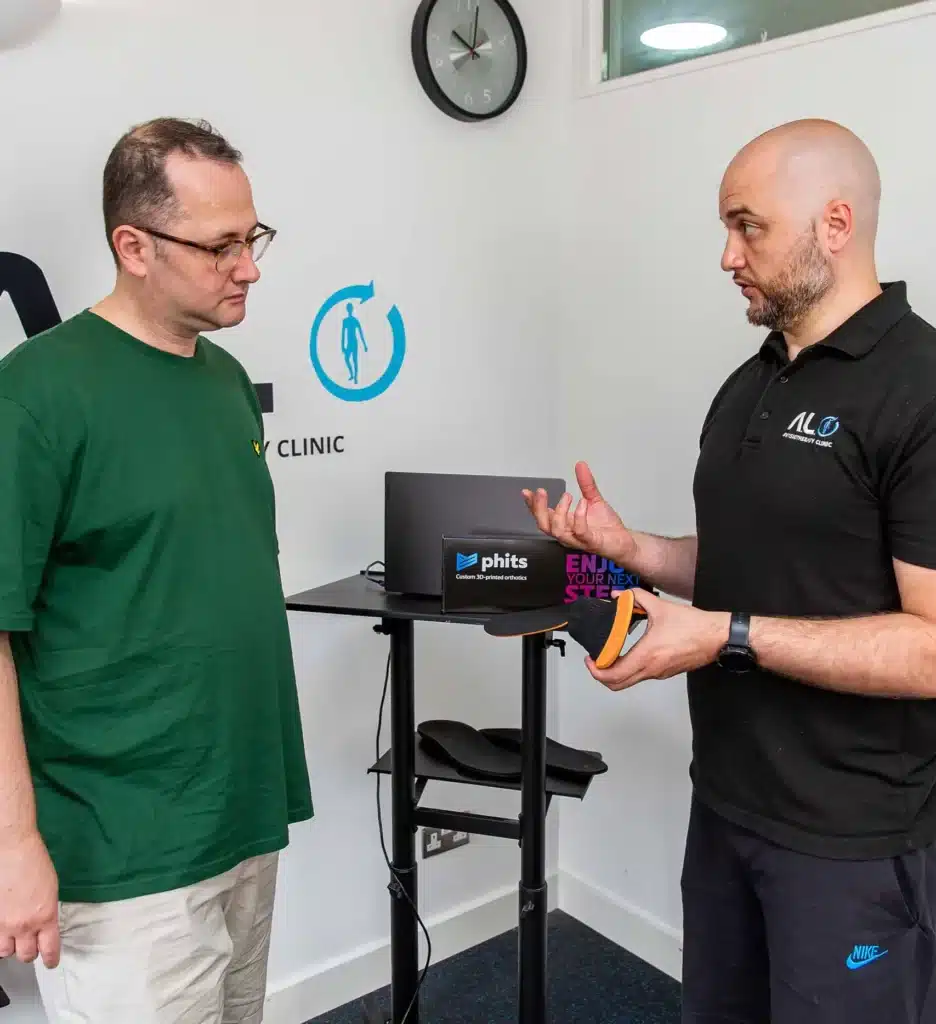
Our modern facility is fully equipped for manual therapy, clinical massage, electrotherapy, taping, VALD performance testing and guided exercise sessions. Every visit is comfortable, professional, and results-focused.
Proven patient success
With over 240 five-star reviews, ALO stands among London’s most trusted physiotherapy clinics.

Do I need Surgery For an ACL Injury?
Not necessarily. The decision to pursue ACL reconstruction surgery depends on a number of factors including the grade of your tear, your age, activity level, and the stability of your knee. Many Grade 1 and Grade 2 (partial) ACL injuries can be successfully managed through physiotherapy alone, building sufficient strength and neuromuscular control around the knee to compensate for ligament laxity.
For Grade 3 (complete) tears, particularly in active individuals or athletes who need to pivot, cut, or change direction at speed, reconstruction surgery is usually recommended. In these cases, physiotherapy plays a vital role both before and after the operation.
At your initial assessment, we will give you an honest clinical view of whether surgery is likely to be necessary for your injury and goals, and can coordinate with your orthopaedic consultant if surgery is recommended.
Types of ACL Injuries
ACL injuries are categorised into three grades, depending on the severity of the ligament damage:
Grade 1
Mild damage where the ligament is slightly stretched but still able to keep the knee stable.
Grade 2:
Moderate damage where the ligament is stretched to the point of becoming loose, often referred to as a partial tear.
Grade 3:
Severe damage where the ligament is completely torn, resulting in a lack of knee stability.
Pre-Surgical Physiotherapy- What is it?
If you are waiting for ACL reconstruction surgery, beginning physiotherapy before your operation is one of the most effective things you can do to improve your outcome. Research consistently shows that patients who complete a structured prehab programme achieve significantly better results after surgery, including faster recovery, greater strength gains, and lower re-injury rates.
ACL prehab at ALO focuses on:
- Reducing swelling and restoring as much range of motion as possible before surgery
- Strengthening the quadriceps, hamstrings, glutes, and calf muscles, the key stabilisers of the knee
- Improving neuromuscular control and proprioception
- Educating you on what to expect post-operatively and how to prepare practically
- Baseline VALD strength testing so we have objective data to track your post-surgical progress against

The 5 Phases of ACL Recovery at ALO
Phase One: Recovery from surgery
- Reduce inflammation
- Restore full knee extension
- Begin muscle activation
Phase Two: Strength & neuromuscular control
- Build quadriceps and hamstring strength
- Improve balance and stability
- Begin controlled movement patterns
- Ongoing VALD testing to monitor LSI.
Phase Three: Running, agility, and landings
- Gradual return to jogging
- Introduce impact and loading
- Change of direction drills
- Plyometrics and landing control
- Reactive neuromuscular training
Phase Four: Return to sport
Sport-specific conditioning, agility and change-of-direction drills, reactive neuromuscular training, and psychological readiness assessment. Clearance for return to sport is criteria-based
Phase Five: Prevention on Injury
Symptoms of ACL
The symptoms of an ACL injury can vary depending on the severity of the injury. Common symptoms include:
- Swelling: Rapid swelling within the first 24 hours of the injury.
- Pain: Intense pain at the time of the injury, which may decrease over time but remains persistent.
- Instability: Feeling of the knee giving way or buckling during physical activities.
- Limited Range of Motion: Difficulty in fully extending or bending the knee.
Causes of ACL
ACL injuries are often caused by movements that place excessive strain on the knee. Common causes include:
- Sports Injuries: Sudden stops, changes in direction, or awkward landings from jumps are frequent causes of ACL injuries in sports like soccer, basketball, and skiing.
- Accidents: Direct impact to the knee, such as in car accidents or falls, can also lead to ACL injuries.
Treatment Options at Alo Physiotherapy
At ALO Physiotherapy, we offer a comprehensive approach to ACL injury treatment, including:
- Physical Therapy: Customised exercise programs to strengthen the muscles around the knee, improve flexibility, and restore function.
- Manual Therapy: Hands-on techniques to reduce pain, improve joint mobility, and enhance tissue healing.
- Tecar: Accelerates the natural regeneration of organic tissue for pain relief and anti-inflammatory purposes.
VALD Testing – quickly and accurately assess your physical condition. - Rehabilitation Programs: Step-by-step guidance through the recovery process, ensuring a safe return to activities and preventing re-injury.
ACL injuries require prompt and effective treatment to ensure the best possible outcome. At ALO Physiotherapy, our team of experienced physiotherapists is dedicated to helping you recover fully and regain your active lifestyle. Contact us today to schedule an appointment and start your journey to recovery.
Frequently Asked Questions
What are the most common symptoms of ACL injuries?
Should I do physiotherapy before ACL surgery?
Will my ACL rehabilitation be covered by health insurance?
What is the risk of re-injuring my ACL?
How long does ACL rehabilitation take?
ACL Treatment Near Me
While our flagship clinic is located in the heart of Harley Street, we are the specialist choice for patients across the capital seeking expert ACL rehabilitation. Our Central London location is easily accessible from the following areas:
ACL Rehab in Central London
Neighbourhoods: Marylebone, Fitzrovia, Mayfair, Soho, Covent Garden, Bloomsbury, St James’s.
Postcodes: W1G (Harley Street), W1U, W1W, W1B, W1S, WC1, WC2.
Nearby Stations: Oxford Circus, Bond Street, Regent’s Park, Great Portland Street.
ACL Rehab in London city and East London
Neighborhoods: The City of London, Barbican, Clerkenwell, Shoreditch, Canary Wharf, Whitechapel.
Postcodes: EC1, EC2, EC3, EC4, E1, E14.
Why Patients Travel to Us: High-performance professionals from the City often visit our Harley Street clinic for specialist ACL treatment during their lunch hour or after work via the Elizabeth Line.
Back Pain Physiotherapy in West and North London
Neighborhoods: St John’s Wood, Hampstead, Primrose Hill, Maida Vale, Paddington, Notting Hill, Kensington.
Postcodes: NW1, NW3, NW8, W2, W8, W11.
Why Patients Travel to Us: We are the primary choice for residents in North West London looking for a private ACL specialist outside of a general hospital setting.
Travel Links: Bakerloo Line, Jubilee Line, and the A40.
Book An Appointment
If you have any questions or queries, or you would like to book a Complimentary Consultation or an appointment please don't hesitate to contact us.
BOOK NOW