5.0 ★★★★★ 220+ reviews on Google
NESA Therapy Treatment to help with sleep, stress and chronic pain relief
Harley Street, Central London
ALO Physio proudly provides expert Nesa Therapy treatment in Harley Street, London.
NESA Therapy Treatment Harley Street
If you’ve been struggling with poor sleep, persistent fatigue, chronic pain, or an overactive bladder, and conventional treatments haven’t given you lasting relief, NESA therapy offers a different approach.
NESA is a non-invasive neuromodulation therapy that works by gently rebalancing your autonomic nervous system the part of your body that controls sleep, pain sensitivity, stress response, bladder function, and energy levels.
What NESA Therapy Can Help With
Chronic pain and neuropathic pain
NESA helps regulate how the nervous system processes pain signals, reducing heightened sensitivity linked to chronic pain conditions. It is often used for neuropathic pain, fibromyalgia, and long-standing musculoskeletal pain that has not fully responded to physiotherapy or medication alone.
Sleep disorders and insomnia
Poor sleep is often linked to an overactive autonomic nervous system, keeping the body in a state of low-level alertness. NESA therapy supports a shift toward a parasympathetic state, improving sleep onset, depth, and recovery quality.
Stress, anxiety and burnout
By supporting nervous system regulation and vagal tone, NESA therapy can reduce physical symptoms of stress such as tension, fatigue, poor sleep, and reduced focus. It is increasingly used in burnout and chronic stress cases.
Athletic recovery and performance
Used in elite sport environments for recovery, sleep optimisation, and nervous system regulation. At :contentReference[oaicite:0]{index=0}, NESA is integrated into athlete performance and recovery programmes.
Overactive bladder and urinary incontinence
The autonomic nervous system plays a key role in bladder control. NESA therapy helps regulate nerve signalling between brain and bladder, supporting reduced urgency, frequency, and incontinence without medication or surgery.
Other conditions
NESA therapy has shown potential benefit in headaches, migraines, bruxism (teeth grinding), sexual dysfunction, neurological recovery (including post-stroke rehabilitation), and constipation linked to autonomic dysfunction. Speak to our team to assess suitability.
What Happens In A Nesa Therapy Session
Before your first session
You’ll have an initial consultation where we discuss your symptoms, medical history, and goals. This allows us to tailor your NESA programme and identify the most appropriate protocol for your condition.
During a session
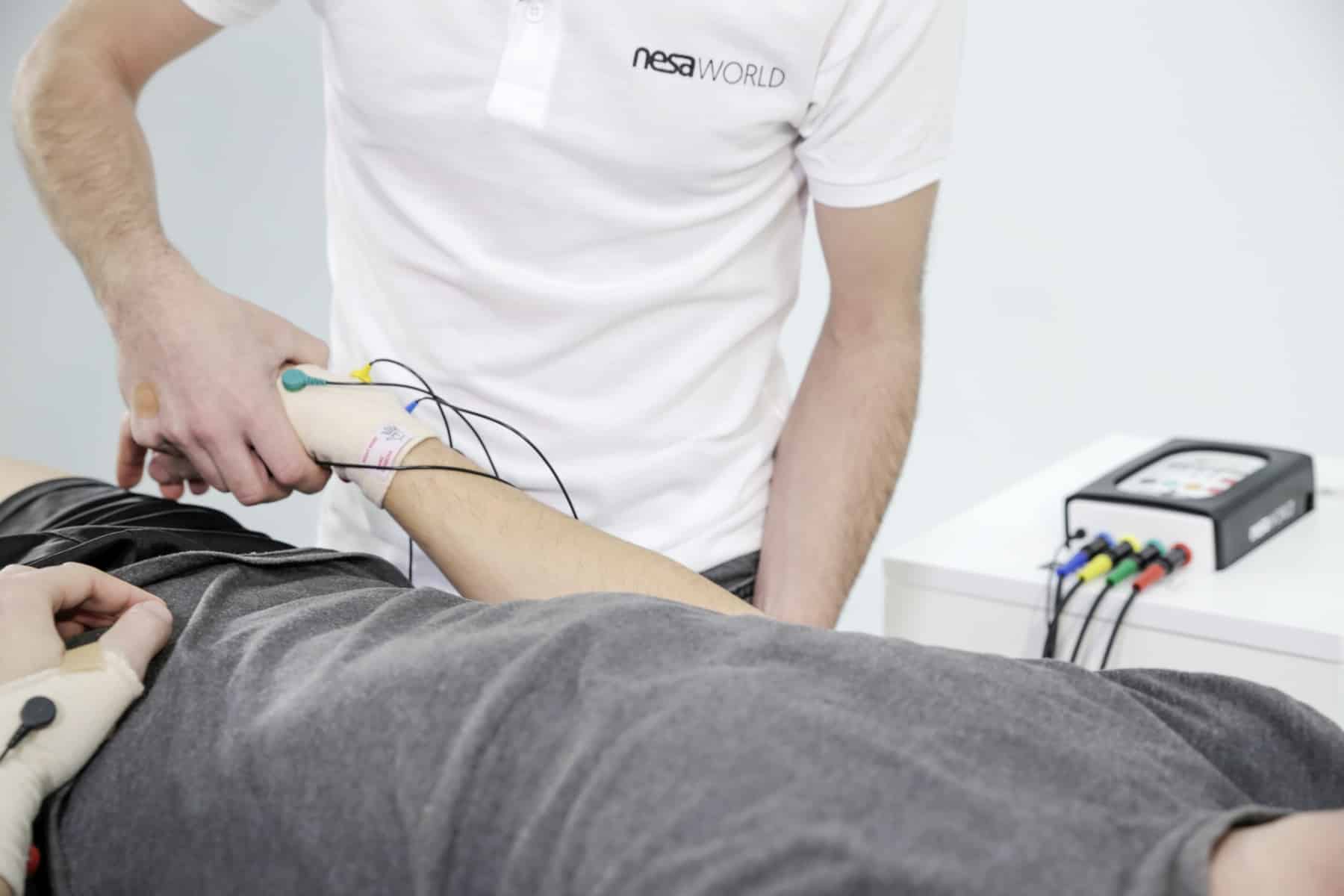
You’ll be seated or lying comfortably. Soft electrode bands are placed on your wrists and ankles that’s all. The NESA device then delivers gentle microcurrents at sub-sensory level; you will feel little to nothing during treatment. Sessions typically last 45-60 minutes. Many patients read, rest, or simply unwind during the session.
How many sessions?
A standard course is 10 sessions, typically scheduled twice per week over 4–5 weeks. For longer-standing or more complex conditions, the first week may involve 3–4 sessions to build therapeutic momentum before reducing to twice weekly. Progress is monitored throughout using heart rate variability (HRV) measurements a key biomarker of nervous system balance.

Appointments within as little as 24 hours
Get clarity on your injury, a structured rehab plan, and a clear route back to football with ALO’s specialist team.
How NESA Therapy Supports Different Conditions
NESA therapy works by targeting autonomic nervous system regulation, helping improve recovery, regulation, and resilience across a range of presentations.
NESA Therapy for Sleep Problems
Sleep disruption is often linked to an overactive nervous system that struggles to switch into recovery mode. NESA therapy supports parasympathetic activation, helping regulate sleep onset, improve sleep quality, and promote more restorative recovery.
NESA Therapy for Chronic Pain
Persistent pain can change how the nervous system processes information, increasing sensitivity and reducing recovery capacity. NESA therapy aims to support nervous system regulation, reducing heightened pain responses often seen in chronic pain conditions.
NESA Therapy for Overactive Bladder
Bladder function relies heavily on autonomic nervous system control. NESA therapy may help improve communication between the nervous system and bladder function, supporting symptoms such as urgency, frequency, and incontinence.
NESA Therapy for Stress & Burnout
Long-term stress keeps the body in a persistent state of threat response. NESA therapy helps regulate autonomic balance, supporting improvements in recovery, energy, concentration, and stress resilience.
Why Patients Choose ALO for NESA Therapy
Treatment delivered by clinicians experienced in complex pain, nervous system regulation, rehabilitation, and recovery.
Every programme is tailored around symptoms, presentation, recovery goals, and treatment response.
We use heart rate variability monitoring to objectively track nervous system regulation and recovery progress.
NESA therapy can be combined with rehabilitation, pelvic health treatment, performance programmes, and physiotherapy.
Delivered from our premium Harley Street clinic environment in central London.

Don’t Let Pain Control Your Life
Whether your pain started gradually or suddenly, early treatment can make a huge difference. At ALO Physiotherapy, we combine expert diagnosis, hands-on treatment, and tailored rehabilitation plans to help you move comfortably again.
Frequently Asked Questions About NESA Therapy
Learn more about how NESA therapy works, what to expect during treatment, and whether it may be suitable for your symptoms.
What is NESA therapy?
NESA therapy is a non-invasive neuromodulation treatment that uses low-frequency microcurrents to support regulation of the autonomic nervous system, helping improve sleep, recovery, pain sensitivity, stress regulation, and bladder function.
Does NESA therapy hurt?
No. NESA therapy is delivered at a sub-sensory level, meaning most patients feel little to nothing during treatment. Sessions are commonly described as relaxing and comfortable.
How many sessions of NESA therapy do I need?
A typical programme involves 10 sessions over 4–5 weeks, although treatment plans are personalised depending on your symptoms, goals, and response to treatment.
What conditions can NESA therapy help with?
NESA therapy may support people experiencing chronic pain, sleep problems, stress, burnout, overactive bladder symptoms, autonomic dysfunction, and recovery challenges.
Can NESA therapy be combined with physiotherapy?
Yes. At ALO Physiotherapy, NESA therapy is often integrated alongside physiotherapy, rehabilitation, pelvic health treatment, and performance programmes.
Book An Appointment
If you have any questions or queries, or you would like to book a Complimentary Consultation or an appointment please don't hesitate to contact us.
BOOK NOW