5.0 ★★★★★ 220+ reviews on Google
Shockwave Therapy
Harley Street, Central London
ALO Physio proudly provides expert Shockwave Therapy treatment in Harley Street, London.
What is Shockwave Therapy and How Does it Work?
What Does Shockwave Therapy Treat?
- Insertional Achilles tendinopathy
- Mid-portion Achilles tendinopathy
- Medial tibial stress syndrome
- Mid-body Achilles tendinopathy
- Patella tip syndrome
- Tennis elbow
- Frozen shoulder
- Plantar fasciitis
- Plantar fasciopathy
- Subacromial pain syndrome


What Are The Benefits Of Shockwave Therapy?
- Pain Relief: Shockwave therapy is an effective treatment for reducing pain in both tendon and bone tissue. Delivering acoustic waves to the affected area, stimulates the body’s natural healing processes, relieving chronic pain conditions.
- Enhanced Blood Flow: One key benefit of shockwave therapy is its ability to increase blood flow to the bone-tendon junctions. Improved circulation helps deliver essential nutrients and oxygen to the tissues, promoting faster healing and recovery.
- Regulation of Cellular Inflammation: Shockwave therapy aids in regulating cellular inflammation, which can be a significant factor in chronic pain and injury. By modulating inflammatory responses, this therapy can help reduce swelling and discomfort, allowing for a more efficient healing process.
- Boosting Cell Activity: This therapy also increases the activity of healthy bone and tendon cells. By stimulating these cells, shockwave therapy encourages the repair and regeneration of damaged tissues, leading to improved function and strength over time.
- Non-Surgical Solution: Many patients find relief without requiring invasive procedures, significantly reducing the risk of complications and the time needed for recovery. This makes it an excellent alternative for those looking to avoid surgery or prolong their treatment journey.
What To Expect During a Shockwave Therapy Session
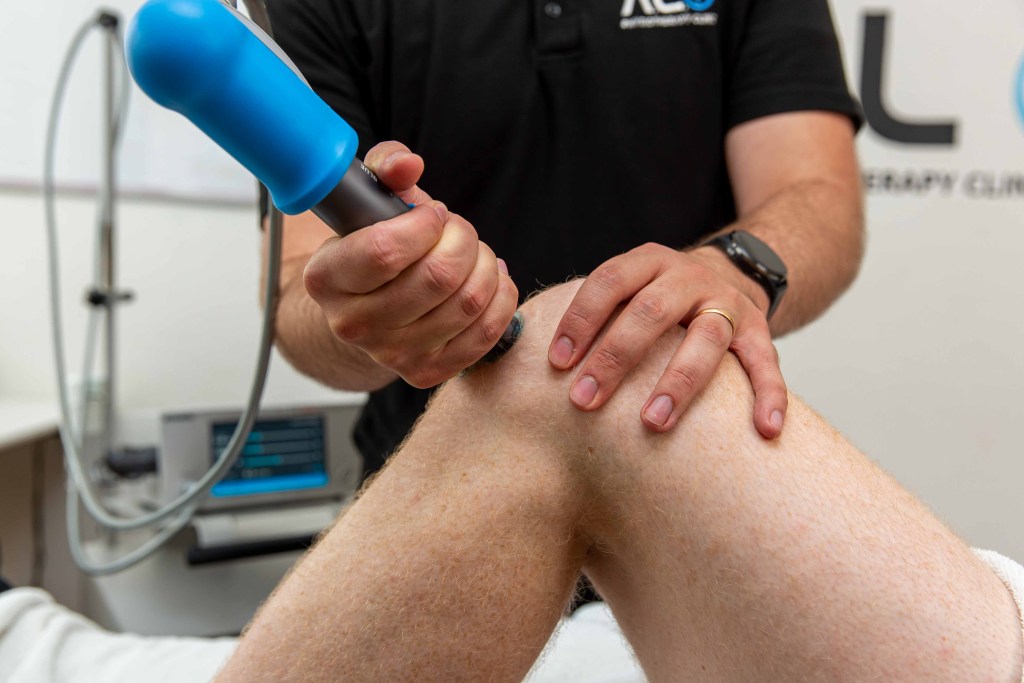
- Our physiotherapist will apply a gel to the targeted area to facilitate the transmission of shockwaves. Then, the physiotherapist will position the shockwave device on your skin, and you’ll feel a series of pulsating waves. Communicate any sensations you experience, as we can adjust the intensity based on your comfort level.
- A typical shockwave therapy session lasts about 15 to 30 minutes, depending on the specific treatment area and your needs. Most patients find the procedure manageable and often report a mild sensation rather than pain.
- After the session, you may notice some tenderness in the treated area, which is normal. Our physiotherapist will provide guidance on any post-treatment care and may recommend follow-up exercises or stretches to support your recovery.
- Our physiotherapist may recommend a series of sessions to achieve the best results.
Is Shockwave Therapy Suitable For Everyone?
Unfortunately, if you have a blood clotting disorder, take blood thinning or anticoagulant medications, are pregnant, or have a nerve disorder, we are unable to administer shockwave therapy.
Are there any side effects of shockwave therapy?
While Shockwave therapy is safe, rare cases may involve some side effects. Certain patients might experience transient pain, redness, bruising, swelling, and numbness in the treated area.
FAQ
What does shockwave therapy do?
Shockwave therapy stimulates the body’s natural healing process. There is an immediate reduction of pain and improved ease of movement.
What not to do after shockwave therapy?
Try to avoid any strenuous activities, especially any that put pressure on the affected area
Does shockwave hurt?
Shockwave therapy may cause some pain or discomfort during the treatment but it should be tolerable. There may also be some redness or bruising after the treatment but this should resolve rather quickly.
Can shockwave therapy cause damage?
Shockwave therapy can have rare but potential risks, including tissue damage, bruising, pain, or swelling at the treatment site.
How many sessions of shockwave therapy for plantar fasciitis?
Most patients need three to six sessions of shockwave therapy for plantar fasciitis. However, the number of sessions depends on the severity of the condition and the number of painful areas.
Book An Appointment
If you have any questions or queries, or you would like to book a Complimentary Consultation or an appointment please don't hesitate to contact us.
BOOK NOW